It’s that time of year again.
The evenings are stretching out, the roads are starting to dry, and the bike’s been sitting there a few months waiting on you. You’ll notice it straight away — more bikes about, that first buzz of getting back out, everything feeling fresh again.
But this is also the time when things go wrong.
Every year across Northern Ireland you hear the same stories early in the season — riders caught out on the first few runs back. It’s rarely one big issue. More often it’s a combination of small things: a bike that hasn’t been properly checked, a rider a bit rusty, and road conditions that aren’t quite what they look like.
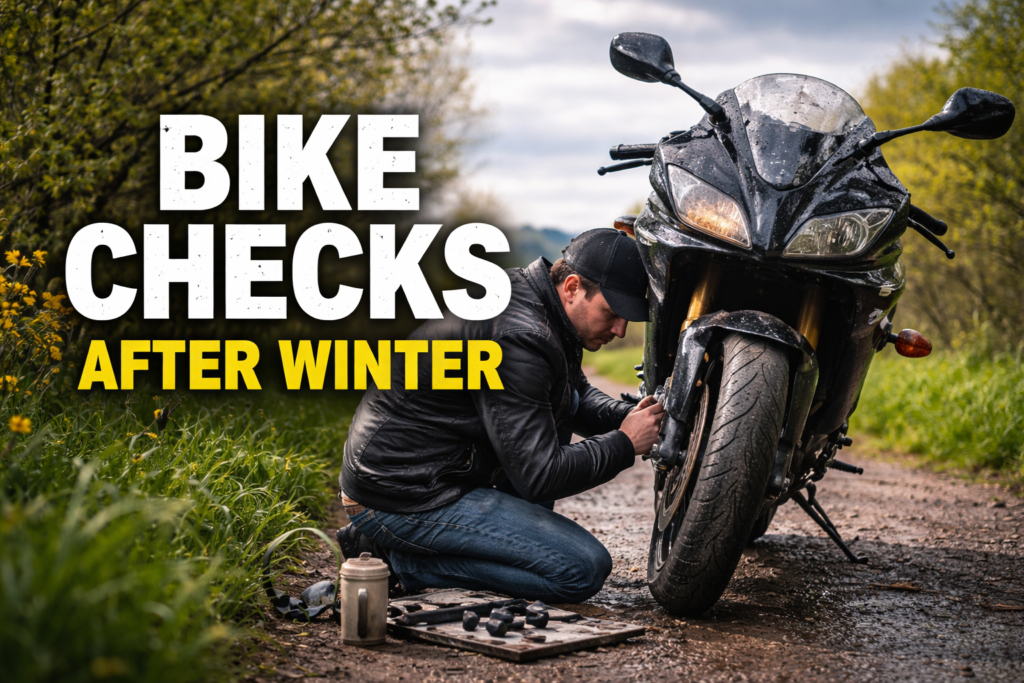
Take a bit of time and go over the bike properly. It doesn’t take long, and it makes all the difference.
Tyres — where it all starts
Tyres are your only contact with the road, so start here.
Pressure will have dropped over winter, guaranteed. Get them back to spec using a proper gauge, not guesswork. While you’re there, take a proper look at the condition — cracks in the rubber, flat spots from sitting, or anything that doesn’t look right.
Tyre pressure has a big impact on how the bike handles as well. Too low and the bike can feel heavy, slow to turn, and unstable through corners. Too high and you lose feel and grip, especially on colder roads. When pressures are right, everything just feels sharper — steering is more predictable, braking feels more solid, and the bike holds its line better.
Even on a bright day, the roads are still cold at this time of year. Grip isn’t where you think it is, and that catches riders out more than anything else on those first few runs.
Battery and electrics — don’t assume it’s fine
If the bike hasn’t been on a charger, the battery could be weak or on its way out.
You want a clean, confident start — no hesitation, no struggling. If it sounds laboured, don’t ignore it.
Check all your electrics while you’re at it:
- Headlight
- Brake light
- Indicators
It’s basic stuff, but it’s also the kind of thing people forget until they’re already on the road.
Oil, fluids, and leaks — quick but important
Give the bike a proper once-over.
Check your oil level and condition. If it’s been sitting for months or you were due a change anyway, just get it done. It’s cheap insurance and removes any doubt.
Then check:
- Coolant level
- Brake fluid
- Any signs of leaks
Anything damp or out of place is worth sorting before you head out.
Fuel — fresh petrol makes a difference
Fuel that’s been sitting in the tank over winter isn’t ideal. It can go stale and affect how the bike runs.
At minimum, top it up with fresh petrol. That alone will usually sort it.
If you want to be thorough, drain and refill completely. Not everyone bothers, but if the bike feels rough or hesitant, stale fuel is often the reason.
Chain, brakes, and movement
Chains don’t like sitting idle. Surface rust can build up quicker than you think.
Give it a clean, lube it properly, and check the tension. Then move on to the brakes — check pads and discs, and make sure nothing is sticking or dragging.
Spin the wheels and make sure everything is moving freely. You want the bike feeling smooth before you’re back at speed.
Fork seals and suspension — easy to miss
Take a look at the fork legs. If you see oil, your seals are leaking and that needs sorted.
Also check for pitting on the fork stanchions — small marks or corrosion spots. These can damage seals over time and lead to leaks, even if everything looks fine at first glance.
Bounce the front end a few times. It should feel smooth and controlled, not sticky or clunky.
Suspension issues are easy to ignore, but they affect how the bike handles more than most people realise.
Paperwork — don’t get caught out
Before you head out, double-check everything is in order:
- MOT
- Tax
- Insurance
It’s always the simplest things that end up causing problems.
Clean it, protect it, and look after it
After sitting all winter, the bike will benefit from a proper wash.
Get rid of any grime, dry it off, and if you’ve got it, a bit of ACF-50 will help protect against corrosion — especially with our weather here.
Take it easy — the most important part
This is the bit that really matters.
You’re getting used to the bike again. Drivers aren’t used to seeing bikes back on the road. And conditions, even when they look good, can still catch you out.
Take it handy for the first few rides. Build back into it. Give yourself space and don’t push things too early.
There’s a full season ahead — no need to rush it.
Getting the bike back out after a few months off is hard to beat.
Just take your time, go over it properly, and ease yourself back in. That’s how you start the year right and keep it that way.
Stay safe. Keep er lit.